

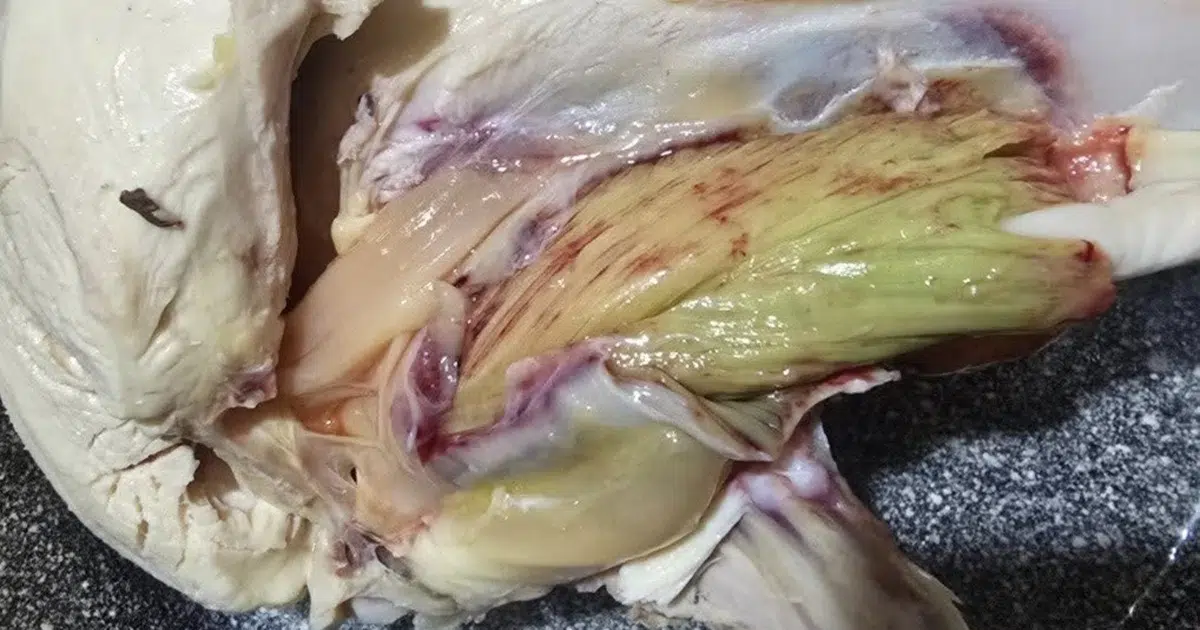
You pull a roasted chicken out of your oven, admiring the crackling, golden skin and the rich aroma of rosemary and garlic filling the kitchen. You reach for your carving knife, slice cleanly through the plumpest part of the breast, and freeze. Tucked beneath that white meat lies a distinct, swampy patch of celery-green flesh.
Your stomach drops immediately. You wonder if your grocery store sold you a diseased bird, whether your slow cooker failed to reach temperature, or if dinner is officially ruined. Staring down at green meat on your cutting board is unsettling, to put it mildly.
Take a breath before tossing the entire meal into the trash bin. While green food rarely inspires culinary confidence, seeing unexpected color inside poultry is more common than most people realize. Let us walk through the real science behind this phenomenon, when you can safely salvage dinner, and when you truly need to toss it out.
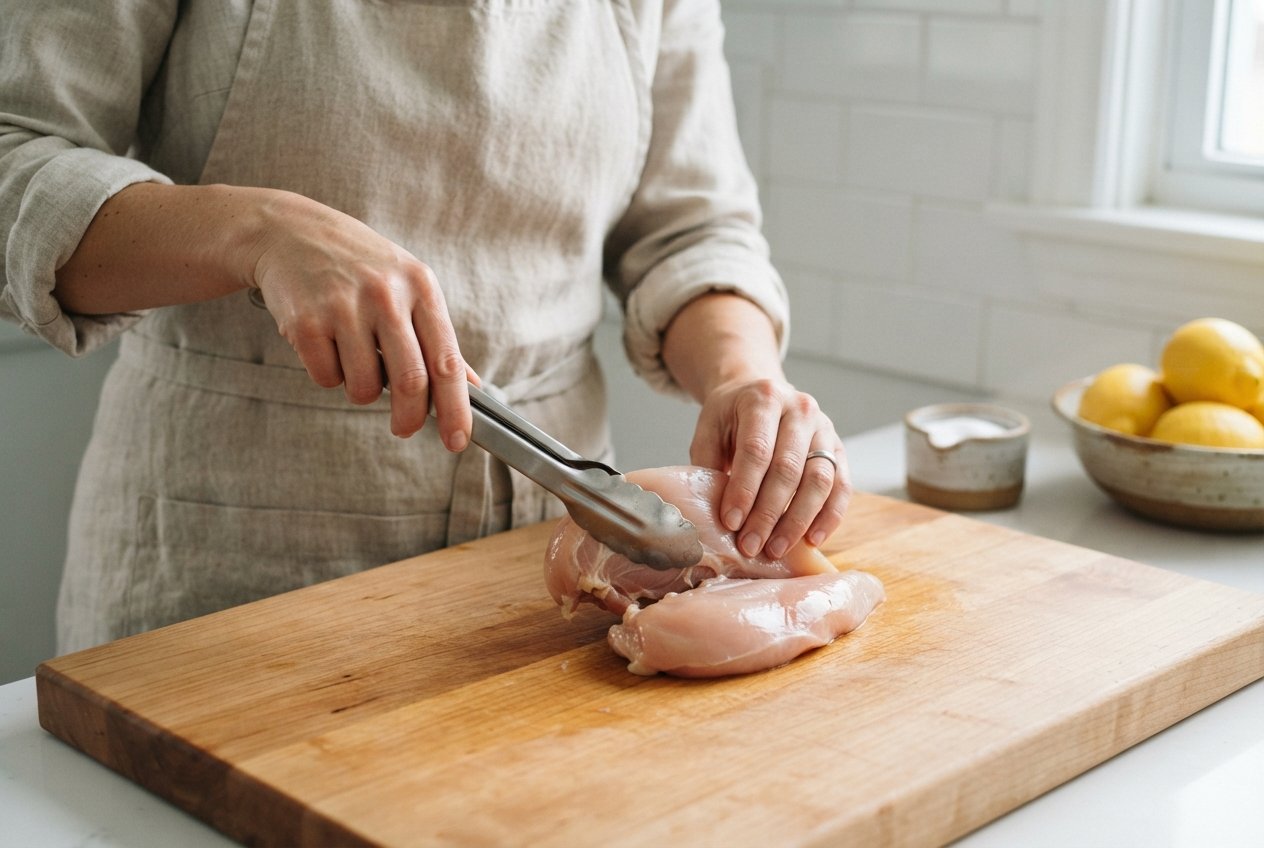
Inspecting raw chicken breasts on your prep board under bright light makes it easy to catch unexpected discoloration before seasoning.
Why Is There Green Meat in Chicken?
Discovering green meat in chicken usually points to one of three distinct causes: an ischemic muscle condition, rough handling that caused deep tissue bruising, or genuine bacterial decay. Each cause behaves differently, feels different to the touch, and carries its own set of rules for the dinner table.
Most home cooks assume green always means rotten. With poultry, that is not necessarily true. When the color shows up deep inside the breast while the bird smells fresh and clean, you are almost certainly looking at a physiological quirk rather than a dangerous pathogen.
Commercial broilers grow broad breast muscles at rapid rates. Because their physical build has changed over recent decades, their circulatory systems sometimes struggle to keep pace with sudden bursts of movement, setting off a chain reaction inside the inner muscle fibers.
What Is Deep Pectoral Myopathy (Green Muscle Disease)?
The primary culprit behind green poultry flesh is a condition called Deep Pectoral Myopathy (DPM), frequently referred to by farmers and butchers as Oregon Disease. It targets the supracoracoideus, which is the tenderloin muscle responsible for lifting the bird’s wings.
This tenderloin rests deep within the chest, enclosed by a rigid, non-elastic membrane of connective tissue called a fascial sheath. When a heavy broiler flaps its wings vigorously—perhaps startled by sudden movement or noise—blood rushes into the tenderloin. The muscle swells rapidly to handle the physical exertion.
Because that tough fascial sheath cannot stretch, the swelling builds intense internal pressure, cutting off the muscle’s own blood supply. The tissue suffocates from a lack of oxygen, resulting in localized ischemic necrosis. Over the following days, the suffocated muscle tissue breaks down, turning from pale pink to dull green as bile pigments like biliverdin develop in the dying cells.
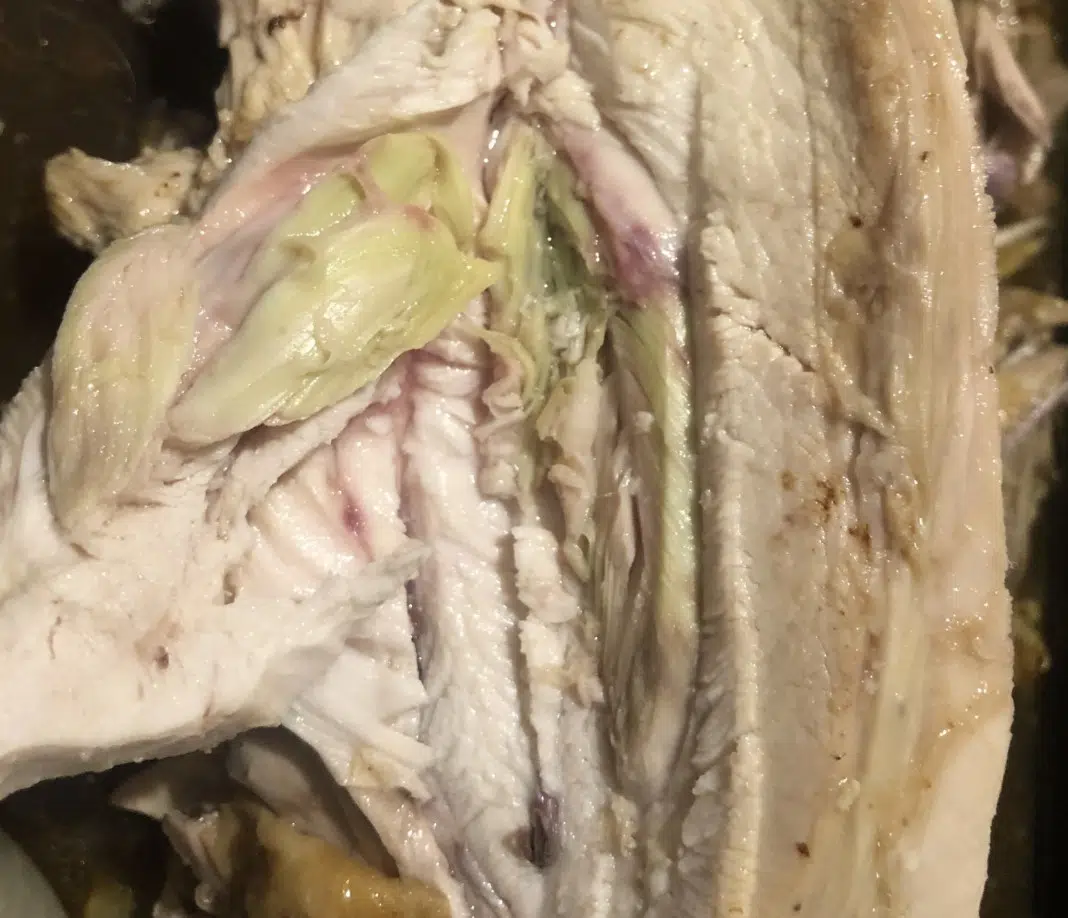
When carving into poultry, deep pectoral myopathy shows up as a dull olive or celery-green fibrous patch buried inside the breast tenderloin.
Here is why it catches so many home cooks off guard: the outer breast meat (the *pectoralis major*) looks completely normal and healthy. USDA plant inspectors examine the outside of whole birds on the processing line, but they cannot see through the outer muscle wall to the tenderloin underneath without slicing the meat open.
What is this piece of green chicken meat?
by
u/double-beans in
TipOfMyFork
Bruising and Broken Capillaries
Chickens can also develop localized green patches from straightforward physical trauma. If a bird bumps against equipment or experiences rough handling prior to processing, small blood vessels rupture deep beneath the skin or inside the muscle fibers.
Just like a bruise on your own shin changes from purple to dark blue, then greenish-yellow as hemoglobin breaks down, pooled blood in chicken muscle shifts color over several days. The meat may exhibit a dull green ring surrounding a darker purple core, often accompanied by clotted blood pockets near the bone.
While unappealing to look at on a dinner plate, traumatic bruising is a mechanical injury rather than a bacterial infection. The surrounding meat remains structurally sound even if that specific spot looks thoroughly unappetizing.
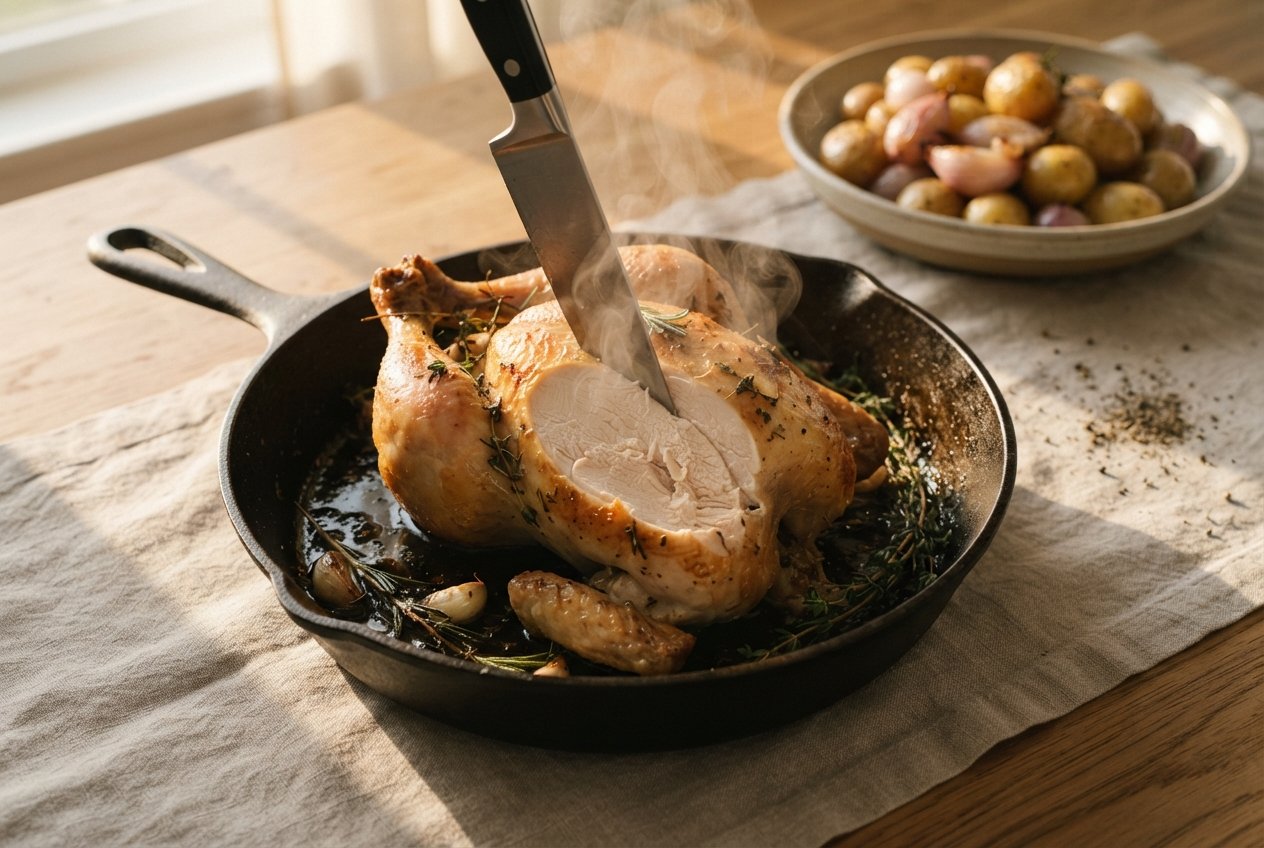
Slicing through the outer breast meat is usually the exact moment home cooks stumble upon unexpected green patches underneath.
Spoilage vs. Muscle Condition: How to Tell the Difference
You need to know whether the discoloration poses an actual health hazard. While Deep Pectoral Myopathy is technically harmless, bacterial rot will leave you with severe food poisoning if you take chances.
Bacterial greening occurs when surface spoilage bacteria, such as *Pseudomonas*, multiply rapidly on meat kept at warm temperatures or stored well past its prime. These bacteria produce pigments alongside hydrogen sulfide, which reacts with meat proteins to form green sulfmyoglobin.
Use this straightforward checklist to determine exactly what you are dealing with before making any decisions:
| Characteristic | Deep Pectoral Myopathy (Green Muscle) | Bacterial Spoilage (Rot) |
|---|---|---|
| Location | Buried deep inside the tenderloin; outer breast looks clean | Starts on outer surfaces, crevices, skin, or edges |
| Aroma | Neutral; smells like normal fresh or cooked chicken | Pungent, sour, sulfurous, or reminiscent of ammonia |
| Surface Texture | Fibrous, slightly dry, or woody within the green patch | Slimy, slick, tacky, or sticky across the meat |
| Surrounding Meat | Moist, firm, and normal color | Soft, mushy, graying, and breaking down |
The Simple Sensory Check
Trust your senses when evaluating poultry. If the raw or cooked breast carries an unpleasant smell—sour, sweet-rotted, or like dirty dishwater—do not pause to analyze muscle anatomy. Throw it straight into the outdoor garbage.
Run your fingertips over the meat. Fresh poultry feels firm and moist with clean water tension. If your fingers glide across a slippery, slick film that leaves a tacky residue, bacteria have taken over the surface. That bird is spoiled regardless of any green hues.
If the chicken smells entirely clean, feels firm, and only displays an isolated green streak buried between the breast lobes, you are looking at classic Green Muscle Disease.

Storing raw poultry on the bottom shelf below 40°F stops surface bacteria cold and keeps accidental drips away from other food.
Can You Eat It, or Should You Throw It Away?
The short answer from food safety authorities: meat affected by Deep Pectoral Myopathy is not infectious, toxic, or hazardous to consume. It is an aseptic necrosis, meaning no bacteria or pathogens caused the tissue death.
That said, “safe” does not mean enjoyable. The green muscle tissue has lost its moisture and cellular structure. Chewing on it reveals a dry, fibrous, or slightly spongy consistency that tastes flat and stringy. Most people find the visual sight alone enough to kill their appetite.
You have three sensible options when handling this on your counter:
- Cut away the affected tenderloin: If you discovered this while carving dinner, slice out the green section along with a small margin of surrounding meat. The remaining outer breast meat is completely uncontaminated and safe to enjoy with your family.
- Return raw packages to the store: If you spot green tenderloins while prepping raw poultry at home, seal the meat back in its package, keep your receipt, and bring it back to your supermarket butcher. Meat managers see this regularly and will happily exchange it or refund your money.
- Discard when doubtful: If you cannot shake the mental hesitation, or if the texture and appearance make anyone at the table uneasy, toss it. Food should bring comfort, not stress.
Golden Rule of Poultry: A color flaw hidden deep inside an otherwise clean, sweet-smelling breast is an aesthetic defect. A color flaw on the slippery, sour-smelling exterior is an active biological hazard.
What If You Accidentally Ate a Bite?
It happens: you were eating quickly, the room had dim lighting, or the discoloration sat on the bottom of a carved slice, and you swallowed a mouthful before noticing the off-color tint. Do not panic.
If the chicken came from a bird that was fully cooked to an internal temperature of 165°F (74°C) and smelled fresh, consuming a small portion of myopathic green meat will not make you sick. Because the condition is an internal circulatory failure rather than a foodborne bug like Salmonella or Campylobacter, your stomach acid will handle it just like normal protein.
Stay hydrated, relax, and monitor how you feel. The most common physical reaction after realizing you chewed on green meat is mild, anxiety-driven nausea rather than true gastrointestinal distress.
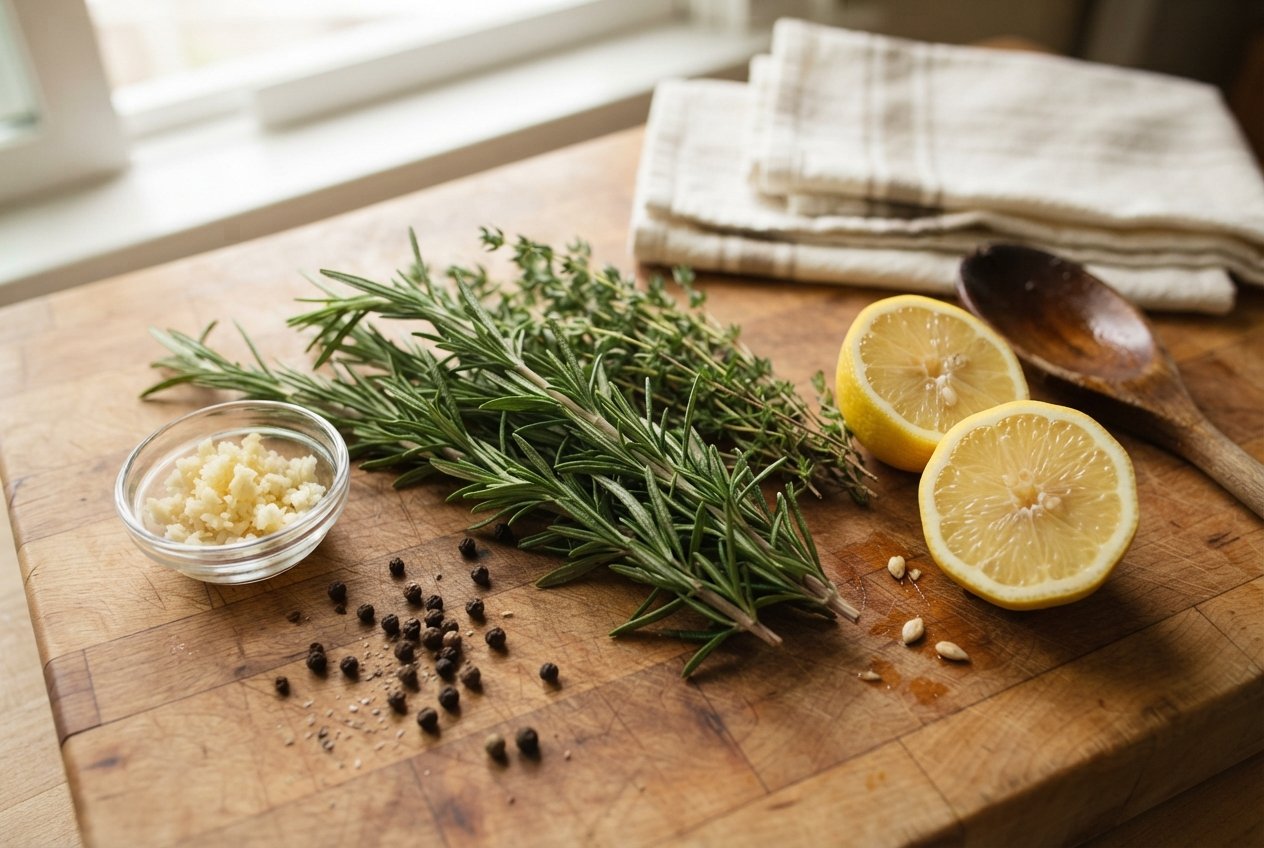
Simple aromatics like fresh thyme, cracked pepper, and lemon lift everyday chicken dinners while you keep food safety front of mind.
Smart Kitchen Habits to Avoid Poultry Surprises
While you cannot control how a broiler flaps its wings on a farm, you can take practical steps to protect your kitchen from bad meat, messy surprises, and spoiled dinners.
- Support careful producers: Pasture-raised heritage birds or slower-growing breeds experience far lower rates of deep pectoral myopathy compared to commercial fast-growing broilers. Buying from local butcher shops or cooperative farms reduces your chances of encountering green muscle tissue.
- Inspect meat before seasoning: When prepping boneless breasts, flip them over and pull back the tenderloin flap under bright kitchen lights. Catching discoloration before you rub the bird with herb butter saves you from cooking a flawed piece of meat.
- Anchor your refrigerator cold chain: Set your fridge between 35°F and 38°F (1.6°C to 3.3°C). Always place raw chicken on the lowest shelf inside a rimmed glass tray to catch any moisture drips. Cook raw breasts within two days of purchase, or wrap them tightly in freezer paper and freeze them for later use.
- Stick to clean aromatics and gentle braising: If you ever encounter slightly dry poultry breasts that need saving, shred the healthy portions into a warm Dutch oven with rich chicken broth, fresh thyme, crushed garlic, and a splash of tart lemon juice to restore lost moisture.
Finding unexpected green meat in chicken can startle anyone, but knowing the biological cause strips away the panic. Assess the smell, check the texture, carve away the unappealing fibers, and serve your dinner with absolute peace of mind.

Leave a Reply